Berry Amendment and ITAR: What to Verify Before You Award a Soft Goods Contract
Berry Amendment compliance and ITAR registration answer two different questions, and defense buyers routinely treat them as one line on a supplier questionnaire. Berry asks where the material came from, down to the thread. ITAR asks who is allowed to look at the drawing. A contract sewing vendor can be clean on one and exposed on the other, and the gap usually surfaces at delivery inspection or during an audit rather than at quote time.
This guide covers what to ask a soft goods supplier, what documentation belongs in the contract file, and which compliance claims sound authoritative but mean nothing. It is written for the sourcing engineer or program manager who has to sign the certification, not for the vendor writing the marketing copy.
Berry and ITAR answer different questions
The Berry Amendment, codified at 10 U.S.C. 4862, is a domestic origin rule. It restricts the Department of Defense from buying covered textile items unless they were grown, reprocessed, reused, or produced in the United States, and it reaches the fabric, the thread, the webbing, and the coating rather than just the finished bag.
ITAR, at 22 CFR Parts 120 through 130, is an export control rule. It governs defense articles, defense services, and technical data. For a sewing vendor the trigger is almost never the case itself. It is the drawing you send them of the radio, antenna assembly, or launcher the case has to fit.
Different statutes, different agencies, different documentation. A supplier who answers both questions with the same sentence has not thought carefully about either one.
Request a Quote from Christian Workshop
How to verify Berry Amendment compliance
Verify Berry Amendment compliance with documents, not statements. Ask for a signed certification that names the specific DFARS clause in your contract, mill certificates for the base fabric that name the domestic mill, and origin records for thread, webbing, and coatings. A general company claim covers nothing. The certification has to trace to the lot that produced your run.
Berry is implemented through DFARS Subpart 225.70, with the restrictions listed at DFARS 225.7002-1. In a contract it appears as a clause, usually DFARS 252.225-7012, Preference for Certain Domestic Commodities. Hand and measuring tools fall under DFARS 252.225-7015 instead.
One quick tell: if a supplier’s compliance page still cites 10 U.S.C. 2533a, that is the superseded citation. Same law, recodified. It tells you how recently they read the regulation they are certifying to.
What the Berry Amendment covers in sewn goods
DFARS 225.7002-1 lists the covered categories. The ones that matter for cases, bags, and covers:
- Clothing and the materials and components thereof
- Tents, tarpaulins, covers, and the structural components of tents
- Synthetic fabric and coated synthetic fabric
- Canvas products, cotton, and other natural fiber products
- Woven silk, silk blends, and spun silk yarn
Whether a specific soft case is covered depends on the item description and the clause written into your contract. The base fabric, the thread, and the webbing in it sit in covered categories regardless, which is the part most vendor pages skip.
There is no de minimis threshold and no percentage test. Berry runs the full depth of the supply chain, from fiber through finished good. A bag cut and sewn in Ohio from Korean 1000D nylon is not compliant. Neither is one sewn domestically with imported thread.
Is “Made in USA” the same as Berry compliant?
No. Made in USA is an FTC advertising standard that permits imported components as long as final assembly happens domestically. Berry is a federal procurement requirement enforced by DoD contracting officers, and it tests every stage of production. The two labels are not stacked tiers of the same idea. They answer to different agencies with different tests.
| Question | Made in USA | Berry compliant |
|---|---|---|
| Governing rule | FTC advertising standard | 10 U.S.C. 4862, DFARS 225.70 |
| Applies to | Consumer-facing claims | DoD procurement of covered items |
| Component origin | Imported components permitted | Domestic through the full chain |
| Thread, coatings, hardware | Not separately tested | Covered |
| Who enforces | Federal Trade Commission | DoD contracting officers, DoD IG, DOJ under the False Claims Act |
When does the Berry Amendment apply to a contract?
Berry applies when a covered item is being bought with DoD funds and the contracting officer writes the clause into the solicitation. Read the solicitation first. Exceptions live at DFARS 225.7002-2 and include purchases below the Simplified Acquisition Threshold, domestic non-availability determinations, contingency acquisitions, and a narrow qualifying-country exception for chemical warfare protective clothing.
The threshold deserves a caution. Published figures disagree. The International Trade Administration references $150,000, citing 86 FR 53931. Industry sources commonly cite $250,000. The Simplified Acquisition Threshold itself rose to $350,000 on October 1, 2025, and Congress has repeatedly moved to close the exception for textiles specifically.
Do not take a dollar figure off a vendor’s marketing page, including this one. Confirm the applicable threshold with your contracting officer for your solicitation.
The Trade Agreements Act does not waive any of this. Congress carved Berry-covered items out of trade agreement obligations, so a designated-country origin that satisfies TAA gives you nothing under Berry.
What non-compliance costs
Non-compliant supplies get rejected at delivery and the contractor absorbs the replacement cost. Repeat or willful failures support termination for default with reprocurement costs attached. Knowing delivery of non-compliant items supports suspension or debarment. A false country-of-origin certification is False Claims Act exposure, which carries treble damages and per-claim penalties.
The DoD Inspector General audits textile and clothing procurement periodically. The exposure sits with the prime, not the sewing shop, which is why the documentation matters more than the vendor’s confidence.
Is “ITAR registered” the same as “ITAR compliant”?
No. Registration with the Directorate of Defense Trade Controls confers no export rights or privileges. It is a precondition for applying for licenses, agreements, and ITAR exemptions, and it puts the government on notice of who is doing defense trade work. It is not an approval, an audit, or a certification of anything.
Registration is valid for one year and has to be renewed. A registration counts as current only if it is unexpired and the information on file is accurate, which means ownership changes, address changes, and senior officer changes get reported as they happen.
So “ITAR Registered” on a supplier’s website tells you they filed a DS-2032 and paid the fee. It does not tell you whether foreign nationals walk past your drawings on the shop floor. Those are separate facts and both belong in your file.
There is also no such thing as “ITAR certified.” The State Department does not certify companies. A vendor using that phrase is repeating marketing copy nobody checked.
What triggers ITAR for a sewing vendor
Under 22 CFR 122.1, any U.S. person or entity that manufactures, exports, temporarily imports, or brokers defense articles, or furnishes defense services, must register with DDTC. A single occasion triggers the requirement, and a company that manufactures U.S. Munitions List items without ever shipping overseas still has to register.
For a soft goods vendor the exposure usually arrives as data rather than product. Technical data tied to a USML item is controlled in its own right. When you send a dimensioned drawing of the equipment a case is being built around, you have transferred controlled technical data, and access has to stay restricted to U.S. persons unless a license or exemption covers it.
What to ask a vendor about ITAR
- DDTC registration code and current expiration date
- Name of the empowered official
- Where technical data is stored, and whether access is restricted to U.S. persons
- Whether any production, pattern work, or sampling happens outside the United States
- Whether drawings are shared with subcontractors, and what flow-down applies
- Whether foreign nationals work at the facility, and how their access is controlled
Berry, Buy American, TAA, and ITAR side by side
These regimes get bundled in procurement conversations because they all sound like country-of-origin rules. Two of them are origin preferences with waivers and price tests. One has neither. Two are export controls that have nothing to do with domestic content at all.
| Regime | Citation | Applies to | Test |
|---|---|---|---|
| Berry Amendment | 10 U.S.C. 4862, DFARS 252.225-7012 | DoD purchases of covered textiles, clothing, food, tools | Fully domestic through the chain, no de minimis |
| Buy American Act | 41 U.S.C. 8301, FAR 52.225-1 | All federal agencies, supplies | Manufactured in the U.S. plus a domestic component cost percentage |
| Trade Agreements Act | 19 U.S.C. 2501, FAR 52.225-5 | Acquisitions above TAA thresholds | Wholly produced or substantially transformed in a designated country |
| Specialty metals | 10 U.S.C. 2533b, DFARS 252.225-7009 | Certain steel, titanium, nickel alloys in defense systems | Melted or produced in the U.S. |
| ITAR | 22 CFR 120-130 | USML defense articles, services, and technical data | Registration, licensing, U.S. persons access control |
| EAR | 15 CFR 730-774 | Dual-use and 600-series items | Classification and license determination |
CMMC and NIST SP 800-171 sit outside this table and govern how a vendor’s IT systems handle controlled unclassified information. If you are emailing drawings, that is a third question, and neither Berry nor ITAR answers it.
Supplier verification checklist
Work through this before the purchase order, not after the first shipment. Every item below is something a compliant vendor can produce on request, and a vendor who stalls on any of them has told you something useful.
Berry documentation to request per order
- Written certification of Berry compliance referencing the specific clause in your contract
- Mill certificates or certificates of compliance for the base fabric, naming the domestic mill
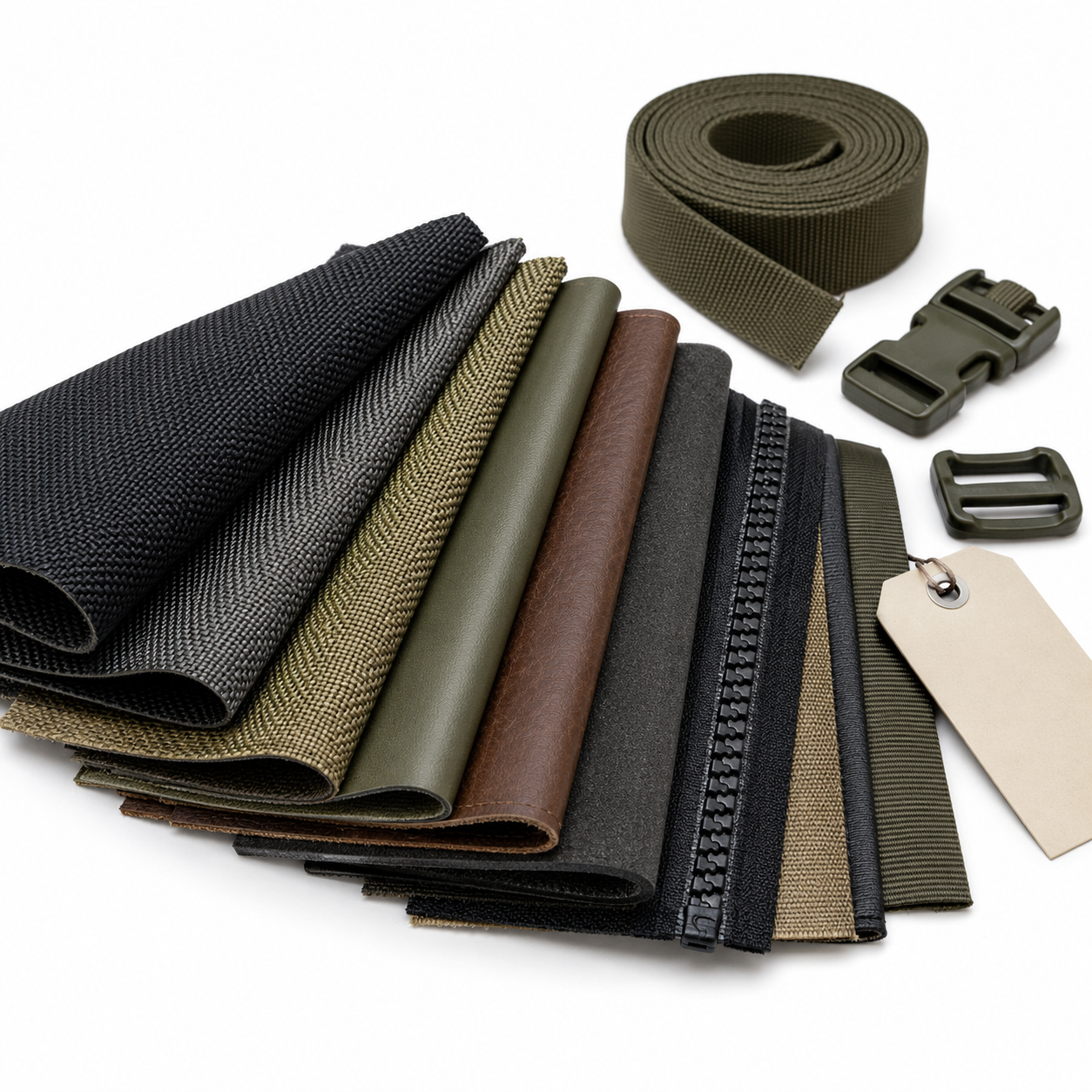
- Origin documentation for thread, webbing, binding, and coatings, not only the face fabric
- Origin documentation for textile hardware
- Confirmation that cutting, sewing, and finishing all occur at a named domestic facility
- Traceability from purchase order to lot for your specific run
Red flags in a supplier response
“We can be Berry compliant if you need it.” Capability to source compliant material is not the same as a compliant supply chain. Vendors who run offshore lines for volume and domestic lines for compliance introduce a switching point, and switching points are where certifications fail. Ask in writing where your specific run will be produced.
A Berry badge with no mill certificates behind it. The logo is a graphic. The certificate is the record.
A supplier who cites 10 U.S.C. 2533a, or who quotes a specific threshold exemption to you as settled fact.
Material bought through a distributor with no mill traceability. If your vendor cannot name the mill, you cannot certify origin, and your signature is the one on the certification.
Call Christian Workshop: (321) 676-2396
Where Christian Workshop stands
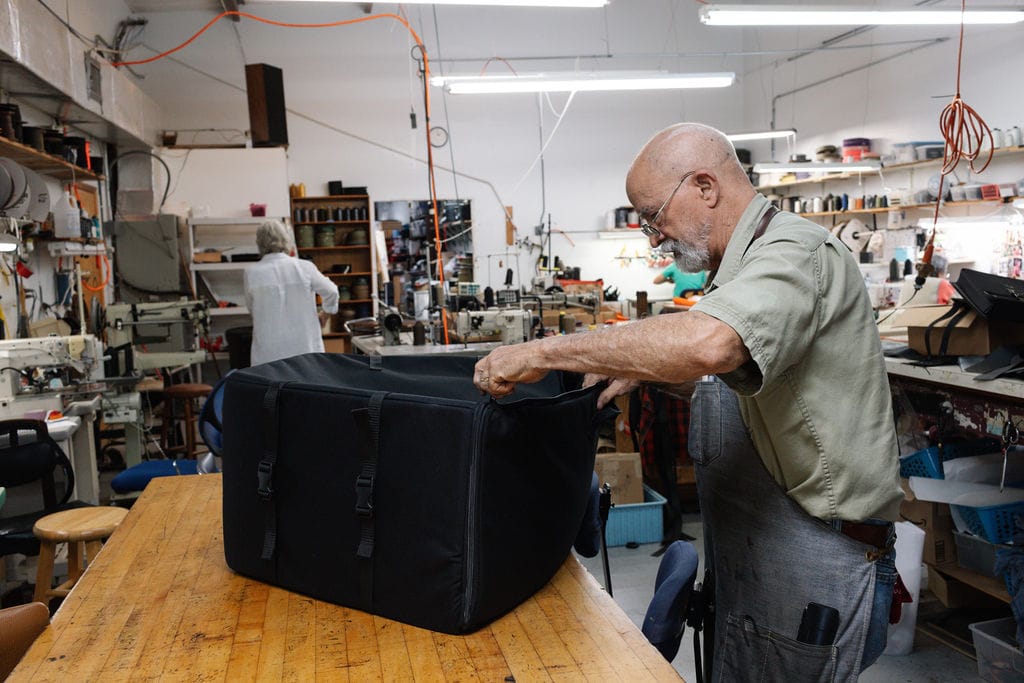
Christian Workshop is a contract industrial sewing and fabrication company at 405 West Dr., Melbourne, Florida, in business since 1971. All cutting, sewing, and finishing happen in that building. There is no offshore production line and no switching point.
| Item | Detail |
|---|---|
| CAGE code | 0FDR6 |
| DUNS | 040211344 |
| NAICS | 314910, 316990 |
| Registrations | SAM registered, ITAR registered with DDTC, D&B registered |
| Membership | ATA member |
| Production | Single facility, Melbourne, Florida. 6,000 sq ft, 20+ industrial sewing machines, commercial laser cutting, die cutting, embroidery. |
| Materials | Domestic, Berry-compliant, and Mil-Spec materials sourced and documented to the clause when the contract requires them. |
| Volume | Low minimums, single or staged releases over the life of a program. |
On Berry specifically: compliance is determined per contract and per material, so Christian Workshop sources to the clause in your solicitation and supplies origin documentation with the order rather than pointing at a badge. If your contract carries DFARS 252.225-7012, say so at quote stage and material selection is built around it from the start.
Registration details and credential documentation live on the credentials page, and the substrate options behind these decisions are covered on the materials page.
Frequently asked questions
Is “Made in USA” the same as Berry compliant?
No. Made in USA is an FTC advertising standard that permits imported components as long as final assembly happens domestically. Berry compliance is a federal procurement requirement under 10 U.S.C. 4862 and runs the full depth of the supply chain, including thread and coatings. A bag sewn in the United States from imported fabric meets the first standard and fails the second.
Does the Berry Amendment apply to cases and bags, or only uniforms?
It reaches well past uniforms. DFARS 225.7002-1 covers clothing and its materials and components, tents and tarpaulins, canvas products, synthetic and coated synthetic fabric, and natural fiber products. Whether a specific case is covered depends on the item description and the clause in your contract, but the base fabric, thread, and webbing sit in covered categories either way.
Does TAA compliance satisfy the Berry Amendment?
No. Congress carved Berry-covered items out of trade agreement obligations, so a designated-country origin that satisfies the Trade Agreements Act gives you nothing under Berry. The two rules test different things. TAA asks whether an item was wholly produced or substantially transformed in a designated country. Berry asks whether every stage happened in the United States.
Is “ITAR registered” the same as “ITAR compliant”?
No. Registration under 22 CFR 122.1 is a filing with the Directorate of Defense Trade Controls and a precondition for licenses and exemptions. It confers no export privileges and is not an audit or an approval. Ask separately about the compliance program, the empowered official, and how access to technical data is restricted to U.S. persons.
Does a sewing vendor need ITAR registration if the case is not a defense article?
Possibly, depending on what you send them. Technical data tied to a U.S. Munitions List item is controlled in its own right, so a dimensioned drawing of the equipment a case is built around can pull the vendor into scope even when the finished bag on its own would not qualify as a defense article.
Is there a dollar threshold below which the Berry Amendment does not apply?
There is an exception tied to the Simplified Acquisition Threshold, but published figures conflict. The International Trade Administration references $150,000, industry sources commonly cite $250,000, and the threshold itself rose to $350,000 on October 1, 2025. Congress has repeatedly moved to close the exception for textiles. Verify the applicable figure with your contracting officer.
What Berry documentation belongs in the contract file?
A signed certification referencing the specific DFARS clause in your contract, mill certificates for the base fabric naming the domestic mill, origin documentation for thread, webbing, and coatings, written confirmation of the production facility, and lot-level traceability tying the certification to your specific run rather than to a general company statement.
This guide is general information about federal procurement and export control requirements, not legal advice. Compliance obligations depend on the clauses in your specific contract. Confirm requirements with your contracting officer and counsel.